Spatial Computing: The Convergence of AR, VR, and Smart Wearables
An overview of the current device landscape, focusing on the shift from tethered headsets to AI-integrated smart glasses.
Artificial Intelligence · Global · 2026-06-20 · 10 min read · By John Awab
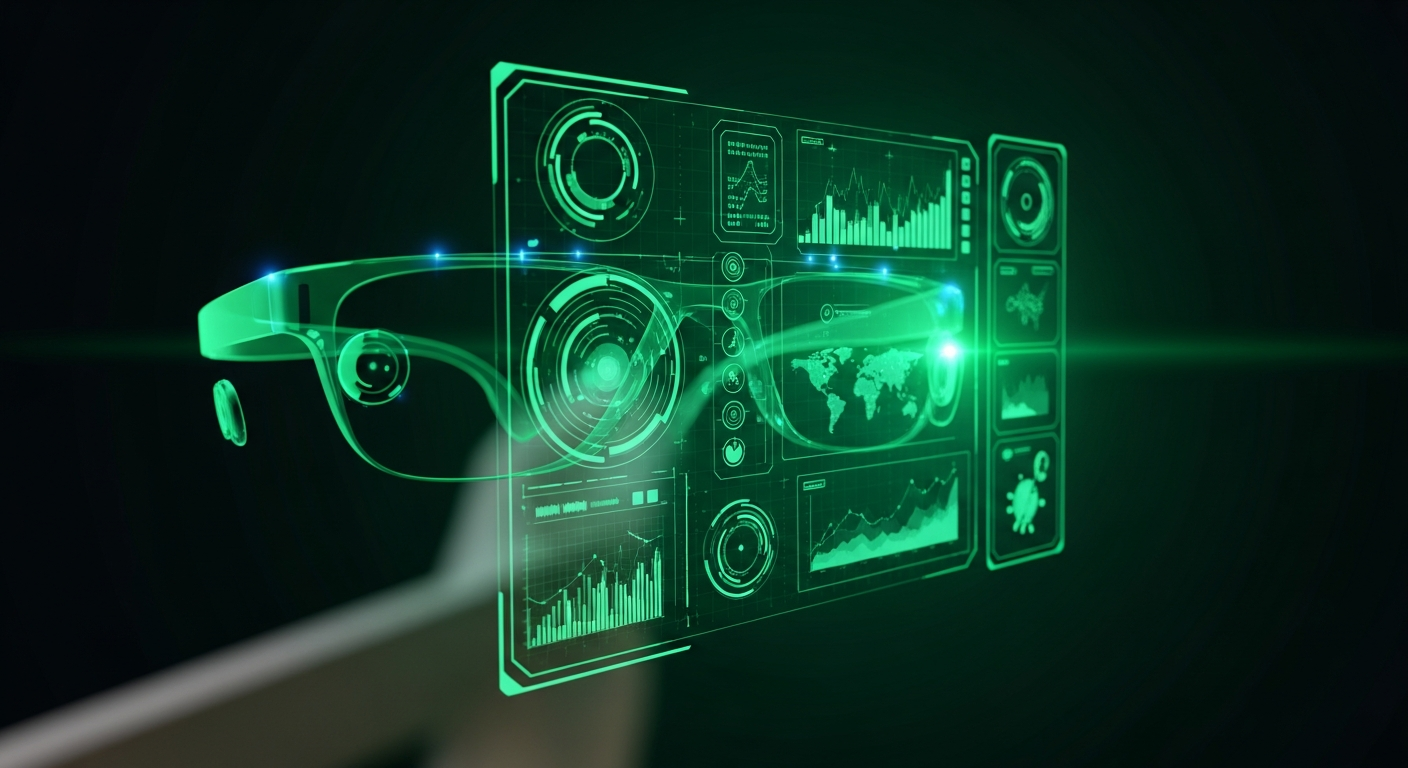
For years, virtual reality promised to change everything and mostly didn't. In 2026, the story has flipped — not because of bulky headsets, but because of glasses. Searches for "Meta glasses" have exploded past two million a month, up several hundred percent year over year, as stylish AI-powered smart glasses become the breakout consumer device of the moment. Meanwhile, headsets have found their footing, AI has made immersive experiences genuinely useful, and the broader vision of spatial computing — computing woven into the world around you — is coming into focus.
This guide explains what AR, VR, MR, and smart glasses are, how they work, the 2026 device landscape, what they're used for, and where the technology is heading. (The hardware lineup and prices change quickly, so verify current devices before buying.)
What Are AR, VR, MR, and XR?
These overlapping terms describe a spectrum of immersive technology:
- Virtual reality (VR) — fully immersive digital environments that replace your view of the real world, experienced through an enclosed headset.
- Augmented reality (AR) — digital information overlaid onto the real world, so you see both at once.
- Mixed reality (MR) — a blend where virtual objects interact with the physical environment in real time, and you can toggle between the two.
- Smart glasses — wearable devices with cameras, voice assistants, and AI, sometimes with a small display and sometimes none at all.
- Extended reality (XR) — the umbrella term covering all of the above.
The key distinction is how much of the real world you still see: VR replaces it, AR and MR augment it, and smart glasses add a layer of AI and capture to ordinary vision.
Smart Glasses: The Breakout Category
The defining 2026 trend is the mainstream arrival of smart glasses. Stylish, lightweight AI wearables — led by collaborations like Ray-Ban Meta and Oakley Meta — have captured public imagination in a way bulky headsets never did, with searches surging by hundreds and even thousands of percent year over year. These devices succeed precisely because they look normal, integrate AI assistants for real-time help, capture photos and video hands-free, and don't require disappearing into a separate device to use them.
How AR/VR Works
Immersive devices combine several technologies. Displays — increasingly micro-OLED and micro-LED paired with waveguide optics — deliver sharp images close to the eye while shrinking device size. Sensors and cameras map your surroundings and track movement. Inside-out tracking lets a headset understand its position in space without external sensors, while hand, eye, and gesture tracking enable controller-free interaction. Passthrough uses cameras to show the real world through a headset's cameras, enabling mixed reality without transparent displays.
The 2026 Device Landscape
The market spans premium to mainstream:
- Meta Quest remains the dominant standalone VR/MR platform, with tens of millions of lifetime sales and a vast app library. The mainstream Quest line (including a sub-$300 entry model) brought mixed reality to the masses.
- Apple Vision Pro set the bar for display quality and interface design as the premium spatial computer, though its high price has kept it in early-adopter and enterprise territory, with a lighter, cheaper successor reportedly in development.
- Smart glasses from Meta, Google, Snap, and others are the fastest-growing segment.
- Lightweight AR glasses from challengers like XREAL, plus devices from Pico, Valve, Rokid, and Viture, round out a fast-diversifying field.
Notably, the market is becoming more competitive: Meta long dominated headset share, but rivals are gaining ground across both headsets and glasses.
What AR/VR Is Used For
Immersive tech has expanded well beyond gaming:
- Gaming and entertainment — still the largest consumer use, plus booming location-based immersive experiences.
- Enterprise training — simulating dangerous or expensive scenarios safely, a major enterprise driver.
- Healthcare — surgical training, therapy, diagnostics, and visualization.
- Education — immersive, hands-on learning that's hard to replicate in a classroom.
- Retail — virtual try-on and AR product previews.
- Manufacturing and design — 3D visualization, digital twins, and remote assistance.
- Productivity — virtual multi-monitor workspaces and immersive collaboration.
This diversification — especially the shift of premium headsets toward enterprise and productivity — reflects a maturing industry finding real value beyond novelty.
The Market and Key Players
The combined VR/AR market now exceeds $100 billion and is transitioning toward mass adoption, with smart glasses driving the fastest growth. Meta leads through its integrated hardware-software-content ecosystem and has invested over $100 billion in its Reality Labs effort. Apple anchors the premium tier and is shaping interface standards. Google is pushing an Android-based XR platform and smart glasses, while Snap, ByteDance's Pico, XREAL, and a wave of competitors are accelerating across both glasses and headsets.
Spatial Computing: The Bigger Idea
Beneath the hardware lies a larger concept: spatial computing — computing that understands and operates within three-dimensional physical space rather than on flat screens. Instead of tapping a phone, you interact with digital content anchored to your real environment, navigated by gaze, gesture, and voice. Many see this as the successor to the smartphone era — a shift from looking at screens to computing woven into the world around you. Whether through headsets or glasses, the shift toward spatial interaction is the thread connecting all of these devices.
The Challenges
Real obstacles remain. Price still limits the most capable devices to early adopters and enterprises. Comfort and form factor matter — headsets can be heavy and cause fatigue, while glasses trade capability for wearability. Battery life constrains untethered use. Content — the "killer app" question — still looms; outside gaming and specific enterprise uses, compelling everyday reasons to use immersive tech are still emerging. And privacy is a growing concern as always-on cameras and sensors become part of everyday eyewear.
The Future
Expect lighter, cheaper, more capable devices — especially smart glasses — with deeper AI integration making them genuinely useful assistants you wear. Displays will keep improving via micro-LED and waveguides, spatial computing will mature, and the line between AR, VR, and ordinary glasses will blur. Some envision AR contact lenses further out. The trajectory points toward immersive and spatial computing becoming a routine layer of daily technology rather than a niche gadget experience.
Conclusion
AR and VR in 2026 have turned a corner. The bulky-headset era has given way to a richer spectrum — VR, AR, MR, and especially the breakout category of AI-powered smart glasses — all converging toward the larger vision of spatial computing. The market has crossed $100 billion, applications span gaming, enterprise, healthcare, education, and retail, and the biggest names in tech are betting this is the next computing platform.
Understanding the spectrum, how the technology works, and the device landscape reveals an industry maturing from hype into genuine utility. Challenges of price, comfort, content, and privacy remain, but with smart glasses going mainstream and AI making experiences truly useful, immersive technology is finally stepping out of the demo and into daily life.
Want more? Explore AxionSquare for ongoing coverage of AR/VR, AI, and the technologies reshaping how we work and play.
Frequently Asked Questions
What is the difference between AR, VR, and MR?
Virtual reality (VR) fully replaces your view with a digital environment; augmented reality (AR) overlays digital information onto the real world; and mixed reality (MR) blends the two so virtual objects interact with the physical environment in real time. XR is the umbrella term for all of them.
What are smart glasses?
Smart glasses are wearable devices with cameras, voice assistants, and AI — sometimes with a small display, sometimes none. Lightweight and stylish, they've become the breakout consumer category in 2026, led by collaborations like Ray-Ban Meta, by integrating AI into everyday eyewear.
How does VR work?
VR headsets use displays close to the eye, sensors and cameras to map surroundings, and inside-out tracking to follow your movement, often with hand, eye, or controller input. Spatial computing lets the device place digital content believably in 3D space, increasingly aided by AI.
What is spatial computing?
Spatial computing is computing that understands and operates within three-dimensional physical space rather than on flat screens.
Is AR/VR worth it in 2026?
It depends on use. Mainstream VR headsets are affordable and strong for gaming and fitness; premium spatial computers excel for enterprise and productivity; and smart glasses offer everyday AI assistance and hands-free capture. With prices, comfort, and AI all improving, the value proposition is the strongest it's ever been.