Autonomous Trucking: Commercial Freight Integration
An analysis of the autonomous trucking sector, focusing on federal regulations, economic efficiency, and human labor impacts.
Transportation · North America · 2026-06-26 · 11 min read · By John Awab
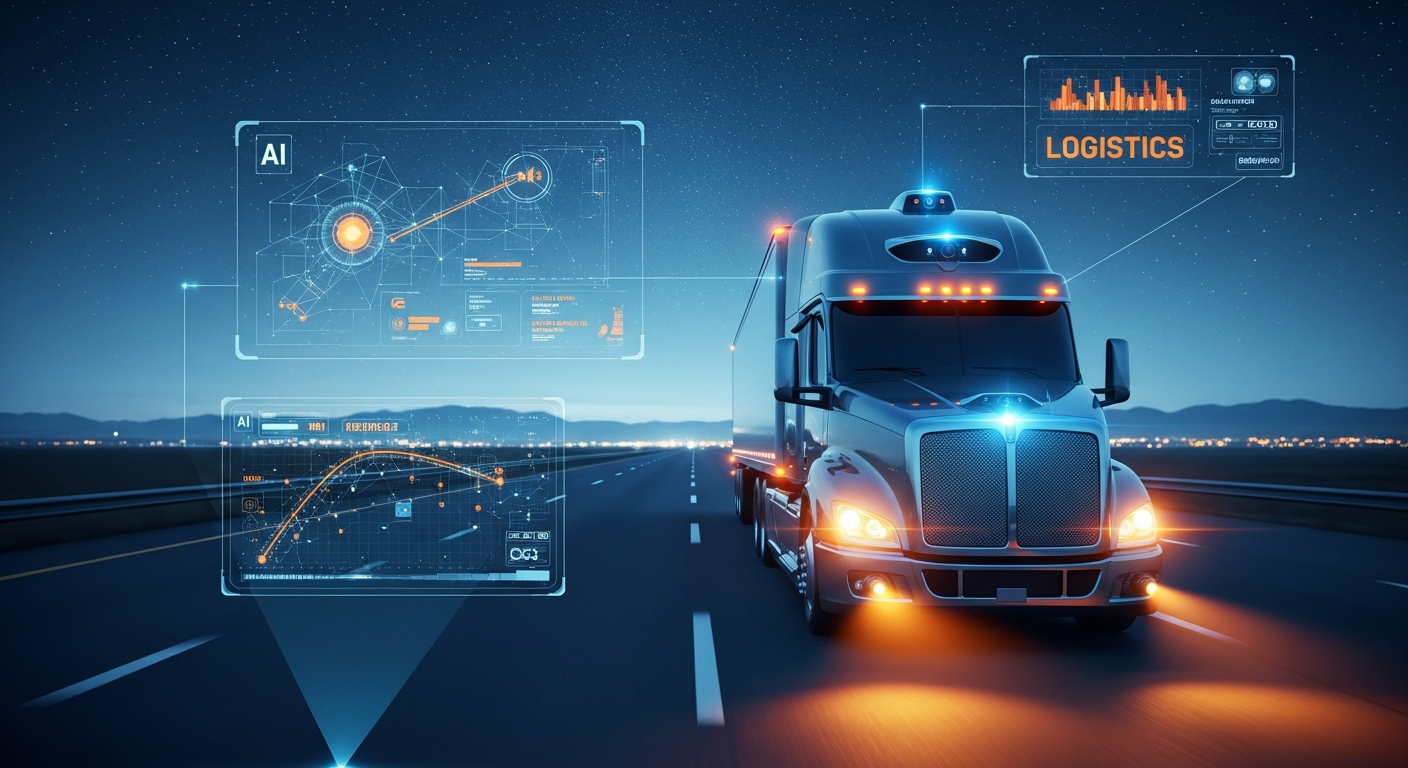
On a 1,000-mile stretch of highway between Fort Worth, Texas, and Phoenix, Arizona, a semi-truck hauls freight nonstop in about 15 hours — something no human driver can legally do, because federal rules force them to stop and rest. There's no one at the wheel. After years of hype and skepticism, autonomous trucking has crossed from test track to revenue-generating reality, and 2026 is the year the industry is calling its inflection point. Driverless trucks are now running commercially on public highways, earning revenue for their operators.
This guide explains what autonomous trucking is, how it works, the key players, the economics driving adoption, the regulatory landscape, what it means for drivers, and where it's heading. (Several companies mentioned are publicly traded; this is general information, not investment advice.)
What Is Autonomous Trucking?
Autonomous trucking is the use of self-driving technology to operate freight trucks — typically heavy-duty semis — on highways with little or no human intervention. The most advanced systems today are "Level 4" autonomous, meaning the truck can drive itself entirely within a defined operating domain (specific highways, routes, and conditions) without a human needing to take over. Companies install a self-driving "driver" — a combination of sensors, computers, and AI software — into trucks built by traditional manufacturers like Volvo and Peterbilt, keeping the familiar cab layout.
The goal isn't a robot navigating crowded city streets, but a tireless machine handling the long, monotonous highway miles that make up the bulk of freight transport — the part of trucking that's hardest on human drivers and where automation delivers the most value.
2026: The Inflection Point
The shift this year is real and measurable. The clearest sign comes from Aurora Innovation, a leading developer that launched commercial driverless operations in 2025 and by early 2026 had logged over 250,000 driverless miles with a clean safety record on its commercial routes, tripling its network to ten lanes across Texas, New Mexico, and Arizona. As Aurora's CEO put it, just as the prior two years brought robotaxis into the mainstream, 2026 is expected to mark the point where trucking crosses from early adoption to mainstream commercial scale.
How Autonomous Trucks Work
A self-driving truck perceives and navigates using a sensor suite — lidar, radar, and cameras — that together provide a 360-degree view far beyond human sight, seeing hundreds of meters ahead and tracking many objects at once. An onboard AI system processes this data in real time to make driving decisions, with redundant systems for safety so the truck can pull over safely if anything fails. This "driver" is integrated directly into trucks from established manufacturers like Volvo and Peterbilt, keeping the familiar cab layout.
The dominant business model is hub-to-hub (or "middle-mile") operation: autonomous trucks handle the long highway stretch between transfer hubs on the edges of cities, while human drivers take over for the complex first-and-last-mile delivery through city streets. This plays to the technology's strengths — steady highway driving — while leaving the trickiest parts to people.
Why Now? The Forces Driving Adoption
Several pressures have converged to make autonomous trucking compelling in 2026:
- A driver shortage and aging workforce. The industry has shed well over 100,000 drivers since the 2022 freight peak, and long-haul trucking remains a high-turnover job few want, given weeks away from home.
- Rising labor costs. Recent large wage increases across transportation are raising the baseline cost of human drivers.
- Powerful economics. Driverless trucks can run far more hours per day than legally permitted for humans.
- Safety. Most truck crashes stem from human error like fatigue or distraction, and developers report strong safety records over millions of autonomous miles.
- Surging freight demand. Freight volumes are projected to grow dramatically over the coming decades, making automation less a novelty than a necessity to move the goods.
The Key Players
A handful of specialists lead the field. Aurora Innovation is widely considered the frontrunner — a pureplay long-haul developer running revenue-generating driverless routes with partners including Hirschbach, Werner, FedEx, Uber Freight, Schneider, and Berkshire Hathaway's McLane, plus truck-maker partnerships with Volvo and Paccar and tech partners like NVIDIA. Kodiak AI is a strong contender, notable for running fully driverless routes and developing partnerships with major trucking companies. Waabi, PlusAI, and Torc round out the competitive field. Notably, Alphabet's Waymo exited trucking in 2023 to focus on robotaxis, leaving the field to dedicated specialists.
The Economics: Why Fleets Are Buying In
The financial case is the engine of adoption. Human drivers are bound by federal Hours of Service rules — capped at around 11 hours of driving with mandatory breaks — so a truck sits idle while its driver rests. An autonomous truck can operate roughly 20 hours a day, dramatically increasing asset utilization, and can run routes (like that 1,000-mile nonstop lane) that exceed what any single human driver could legally complete. Add the elimination of driver wages, the ability to run continuously, and lower accident costs, and the total cost of ownership picture becomes compelling for large fleets.
Where It's Happening — and the Regulation
Autonomous trucking has converged on Texas and the Sun Belt, and for good reasons: a pro-business, light-touch regulatory environment, enormous freight volumes flowing between Texas, Arizona, and California, and mild weather that spares the technology from snow and ice. Aurora has mapped expansion across many southern states, from Oklahoma and Louisiana to the Carolinas, Georgia, and Florida.
Regulation, however, remains a patchwork. There's no comprehensive federal framework yet, so states set their own rules — creating inconsistency that complicates cross-state operation. A proposed federal bill (the AMERICA DRIVES Act) aims to establish a national standard allowing driverless commercial trucks to operate across state lines, and the federal government is broadly pushing toward standardization, but the legal landscape is still evolving.
What It Means for Truck Drivers
The jobs question is unavoidable, and the honest answer is nuanced. In the near term, the industry is embracing a hybrid model: autonomous trucks take the long, undesirable highway hauls while human drivers handle shorter, local routes that get them home daily. Carriers frame this as a "win-win" that improves drivers' quality of life amid a labor shortage rather than mass layoffs, and the current driver deficit means automation is filling unmet demand more than displacing workers for now. Longer term, as the technology scales, the impact on driving jobs will be significant and remains a real concern.
The Reality Check and Challenges
For all the momentum, perspective matters. Many "driverless" routes today still carry a human observer in the cab (who doesn't drive) at the truck-maker's request, with full driver-out operation rolling out gradually. The biggest remaining hurdle isn't the core technology — developers say that's largely proven — but scaling: manufacturing capacity, building out trucks and transfer hubs, and operating large fleets reliably. Weather remains a limit, keeping early operations confined to mild-weather Sun Belt routes for now.
The Future
The trajectory points up and to the right. Industry leaders envision tens of thousands of driverless trucks moving freight within a few years, expansion beyond the Sun Belt as the technology matures and handles more weather, full driver-out operations becoming standard, and eventually a federal framework enabling nationwide routes. Costs should fall as next-generation hardware arrives and fleets scale. Some analysts see autonomous trucking reshaping a freight industry worth hundreds of billions of dollars.
Conclusion
Autonomous trucking has moved from promise to commercial reality, with driverless semis now hauling real freight across the Sun Belt and 2026 marking the industry's recognized inflection point. Powered by lidar, radar, cameras, and AI, operating on a hub-to-hub model, and driven by a potent mix of driver shortages, compelling economics, and safety, self-driving trucks are scaling faster than many expected.
Real challenges remain — manufacturing scale, weather, regulation, and the profound questions about driving jobs — but the direction is set. Understanding how autonomous trucks work, who's building them, and why fleets are buying in reveals one of the most consequential transformations underway in transportation. The freight that powers the economy is increasingly moving itself. As always, this is general information, not investment advice.
Want more? Explore AxionSquare for ongoing coverage of autonomous trucking, self-driving cars, electric vehicles, and the future of transportation.
Frequently Asked Questions
What is autonomous trucking?
Autonomous trucking is the use of self-driving technology to operate freight trucks on highways with little or no human intervention. The leading systems are "Level 4" autonomous, meaning the truck drives itself entirely within a defined domain, using sensors, computers, and AI integrated into trucks built by traditional manufacturers.
How do self-driving trucks work?
They use a sensor suite of lidar, radar, and cameras for a 360-degree view, with an onboard AI system making real-time driving decisions and redundant systems for safety. Most operate on a "hub-to-hub" model: autonomous trucks handle long highway stretches while human drivers manage complex first-and-last-mile city driving.
Which companies lead in autonomous trucking?
Aurora Innovation is widely considered the frontrunner, running commercial driverless routes with partners like FedEx, Werner, and Uber Freight. Kodiak AI is a strong contender, along with Waabi, PlusAI, and Torc. Alphabet's Waymo exited trucking in 2023 to focus on robotaxis.
Will autonomous trucks replace truck drivers?
In the near term, the industry favors a hybrid model where autonomous trucks handle long highway hauls and humans do shorter local routes, framed as easing a driver shortage rather than mass layoffs.
Why are self-driving trucks concentrated in Texas?
Texas and the Sun Belt offer a pro-business, light-touch regulatory environment, enormous freight volumes between Texas, Arizona, and California, and mild weather that spares the technology from snow and ice. This makes the region ideal for early commercial deployment.
Sources and further reading
- Federal Motor Carrier Safety Administration (FMCSA) — Regulatory guidelines and safety standards for automated driving systems