Collaborative Robots (Cobots) in 2026: A Guide
A clear guide to collaborative robots (cobots) in 2026 — how they differ from industrial robots, how they work safely, top uses, leaders, and the market.
Robotics · Global · 2026-06-15 · 10 min read · By John Awab
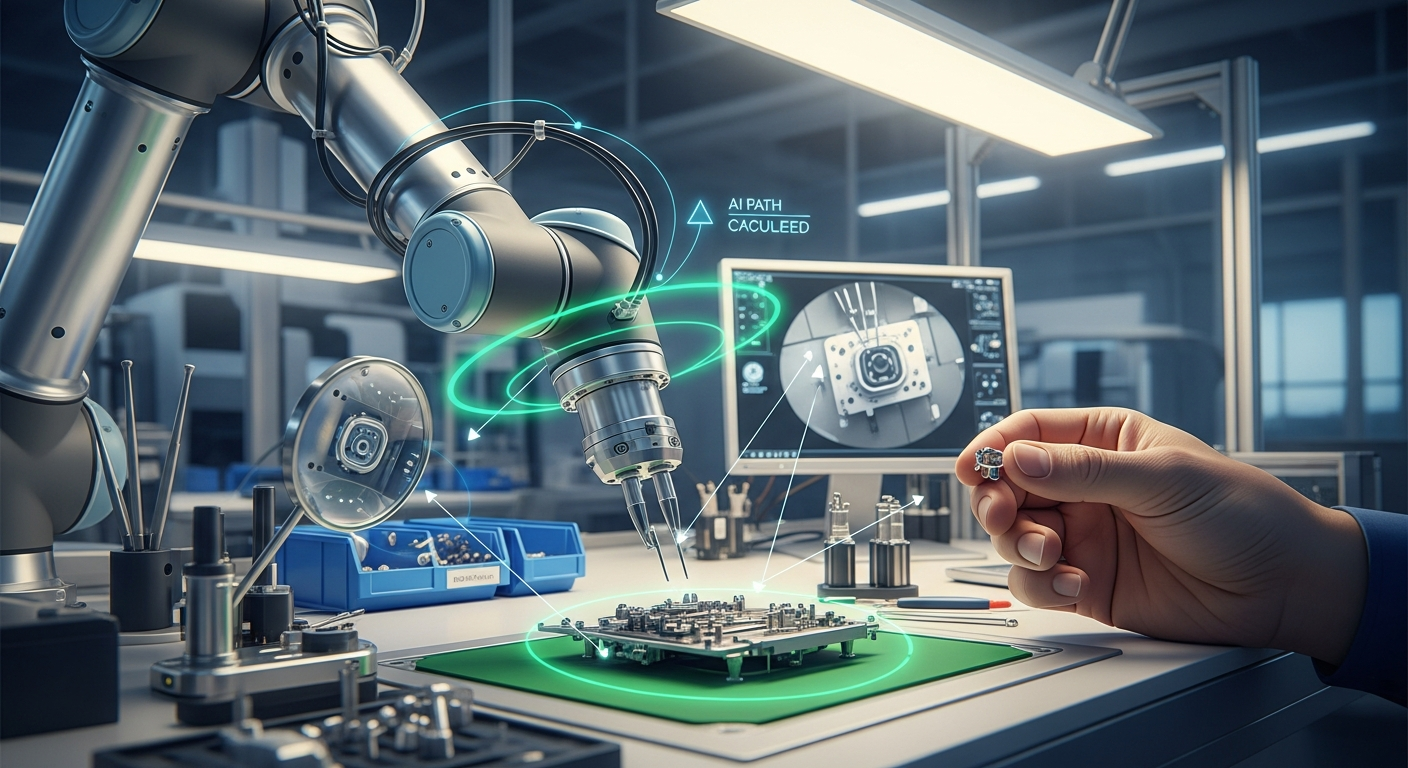
For decades, industrial robots were caged beasts — powerful, precise, and dangerous enough that they had to be fenced off from human workers. Collaborative robots, or "cobots," tore down those cages. Designed to work safely alongside people, cobots are easy to program, flexible to redeploy, and affordable enough that small workshops can finally automate. With global installations now well past half a million units, cobots are quietly democratizing robotics — and 2026 is bringing a notable shift in who makes them.
This guide explains what collaborative robots are, how they differ from traditional industrial robots, how they work safely, what they're used for, the market, and the leading makers. Whether you run a factory or are simply curious, here is the clear picture. (Market figures vary widely by source and scope, so treat them as estimates.)
What Are Collaborative Robots (Cobots)?
A collaborative robot is a robot designed to work safely in a shared space with human workers, without the safety cages that traditional industrial robots require. Typically a lightweight robotic arm, a cobot assists people with tasks — handing over parts, holding components, performing repetitive motions — rather than replacing them entirely behind a barrier.
The name says it all: cobots collaborate. They're built around the idea of human-robot teamwork, combining a robot's tirelessness and precision with a human's judgment and dexterity.
Cobots vs Traditional Industrial Robots
The differences are fundamental:
- Safety: Cobots are built to operate safely beside humans using force-limiting and sensors; traditional industrial robots are fast and powerful but must be fenced off.
- Programming: Cobots are easy to set up — often via hand-guiding or no-code interfaces in hours; industrial robots usually require specialized programming over days or weeks.
- Flexibility: Cobots are lightweight and easily moved between tasks; industrial robots are typically fixed in place.
- Payload and speed: Cobots handle lighter loads (often up to ~5 kg) and move more slowly for safety; industrial robots lift far more and move faster.
- Cost and scale: Cobots are cheaper and ideal for small and medium enterprises; industrial robots suit high-volume production.
In short, industrial robots are about raw throughput; cobots are about accessible, flexible, human-friendly automation.
How Cobots Work Safely Alongside Humans
Safety is the cobot's defining feature, achieved through several mechanisms. Force and power limiting ensures that if the cobot contacts a person, it stops or yields before causing harm. Sensors (force-torque, proximity, vision) let it detect humans and obstacles and slow or halt accordingly. Rounded, lightweight designs reduce injury risk. These capabilities map to internationally recognized collaborative-operation safety standards, which define modes ranging from speed-and-separation monitoring to hand-guiding.
Why Cobots Are Easy to Deploy
A big reason for cobots' popularity is how approachable they are. Many can be programmed by physically guiding the arm through a motion (hand-guiding) or via simple no-code interfaces, so a shop-floor operator — not a robotics engineer — can set up a new task in hours. They're light enough to move between jobs, and a rich ecosystem of plug-and-play grippers, vision systems, and accessories (Universal Robots' UR+ ecosystem alone exceeds 500 certified products) makes them quick to customize for new applications.
What Cobots Are Used For
Cobots handle a wide range of light, repetitive tasks:
- Assembly and disassembly — the single largest application.
- Pick-and-place — moving items between stations.
- Machine tending — loading and unloading other machines.
- Quality inspection — using vision to check parts (a large share of US manufacturers now use cobots in quality control).
- Welding, packaging, and palletizing — increasingly common with specialized end effectors.
The biggest adopters are automotive and electronics manufacturers, with healthcare, agriculture, and food processing growing fast. Most cobots today perform pick-and-place and inspection work in those sectors.
The Cobot Market in 2026
Cobots are a fast-growing slice of robotics. Market-size estimates vary widely by scope — from roughly $1 billion to nearly $3.7 billion in 2026 — but all sources agree on rapid double-digit annual growth, with some long-range forecasts reaching tens of billions by the mid-2030s. Global cobot installations have surpassed 553,000 units, with tens of thousands deployed each year. Asia-Pacific leads adoption (around 42% share), followed by Europe (~30%) and North America (~22%), with demand spreading to small and medium-sized enterprises across manufacturing.
The Leading Cobot Makers
The competitive picture is shifting notably. Universal Robots (Denmark) remains the pioneer and market leader, anchored by its huge UR+ accessory ecosystem. But a striking 2026 development is the rise of Chinese makers — Dobot, AUBO, and JAKA now occupy three of the top four positions by share, a sharper shift than in the traditional industrial-robot market. The established giants — FANUC, ABB, KUKA, Yaskawa — compete strongly, alongside specialists like Techman, Doosan, and Franka Emika.
Why Adoption Is Surging
Several forces drive cobot growth. Labor shortages and rising labor costs push companies toward automation — and cobots are the accessible entry point. Safe human-robot collaboration lets firms automate without redesigning their entire workspace, accounting for a large share of demand. Ease of programming removes the need for specialized robotics staff. And AI and sensor advances are making cobots smarter — some now offer AI-driven path optimization that meaningfully reduces cycle times.
Challenges
Cobots aren't a fit for everything. Their lower payload and slower speeds make them unsuitable for heavy or high-throughput tasks better served by caged industrial robots. Upfront cost for advanced models can still deter the smallest firms, though leasing and robot-as-a-service models help. And safety regulations for human-robot collaboration vary by region and require careful, application-specific risk assessment. Cobots complement industrial robots; they don't replace them.
The Future
Expect cobots to get smarter, more capable, and more autonomous as AI improves their perception and decision-making. Payloads and speeds will rise, mobile cobots mounted on autonomous bases will expand their reach, and the line between cobots and emerging humanoid robots will blur as both pursue safe, flexible work alongside people. As automation continues democratizing, cobots are likely to be how millions of smaller businesses take their first step into robotics.
Conclusion
Collaborative robots have transformed automation from a fenced-off, capital-intensive endeavor into something accessible, flexible, and human-friendly. By working safely beside people, programming in hours rather than weeks, and costing a fraction of traditional systems, cobots have opened robotics to the small and medium businesses that drive much of the economy.
With installations past half a million, growth accelerating, and a competitive landscape now reshaped by a surge of Chinese makers challenging the Danish pioneer, 2026 is a pivotal year for the technology. Cobots won't replace heavy industrial robots — but they are quietly bringing automation to everyone else.
Want more? Explore AxionSquare for ongoing coverage of robotics, automation, AI, and the technologies transforming work.
Frequently Asked Questions
What is a collaborative robot (cobot)?
A cobot is a robot designed to work safely alongside human workers without safety cages, typically a lightweight robotic arm that assists people with tasks like assembly, pick-and-place, and inspection rather than replacing them behind a barrier.
How are cobots different from industrial robots?
Cobots work safely beside humans, are easy to program (often in hours), are lightweight and flexible, and cost less — but handle lighter payloads and move more slowly. Traditional industrial robots are faster and more powerful but must be fenced off and require specialized programming.
How do cobots stay safe around people?
Through force and power limiting (stopping or yielding on contact), sensors that detect people and obstacles, and rounded lightweight designs, all mapped to collaborative-operation safety standards. Safe deployment still requires an application-specific risk assessment.
What are cobots used for?
Common uses include assembly and disassembly (the largest application), pick-and-place, machine tending, quality inspection, welding, packaging, and palletizing — primarily in automotive and electronics, with healthcare and agriculture growing fast.
Which companies make the best cobots?
Universal Robots (Denmark) leads the market, but Chinese makers Dobot, AUBO, and JAKA now hold three of the top four positions. Established giants FANUC, ABB, KUKA, and Yaskawa, plus specialists like Techman, Doosan, and Franka Emika, also compete strongly.