Edge Computing: Decentralized Data Processing
An examination of edge architecture vs. cloud centralization, emphasizing latency, computational efficiency, and data localization.
Artificial Intelligence · Global · 2026-06-27 · 11 min read · By John Awab
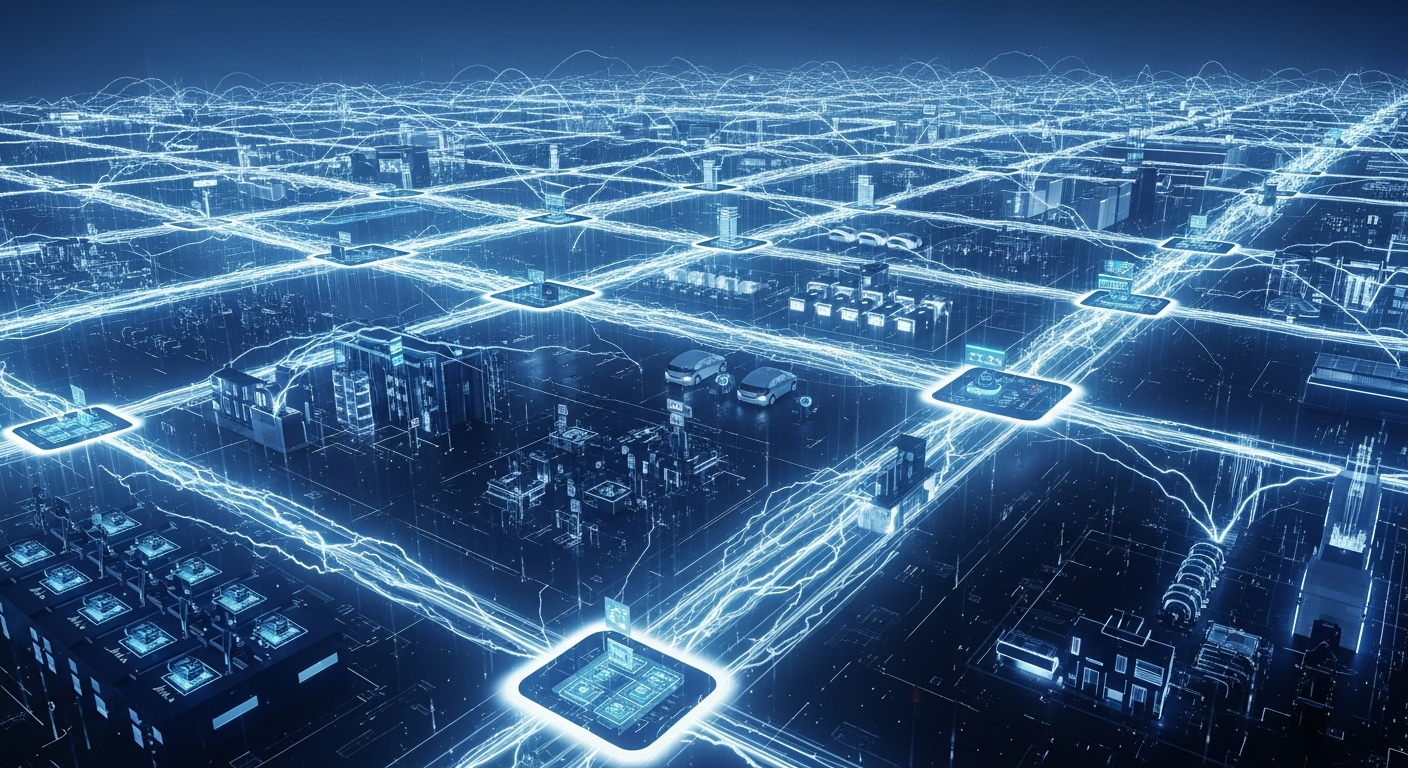
A self-driving car spotting a pedestrian can't afford to send the image to a distant data center, wait for a reply, and then brake — the round trip takes too long, and lives depend on milliseconds. So increasingly, the computing happens right there, on the vehicle itself. This is the core idea of edge computing: instead of hauling all data to a centralized cloud, you bring the processing to where the data is created. With billions of connected devices generating an ocean of data that must be processed quickly and efficiently, edge computing has become one of technology's defining infrastructure shifts.
This guide explains what edge computing is, why it's surging now, how it works, how it relates to the cloud, the rise of edge AI, the real-world applications, and the challenges ahead. (Market figures vary widely by source and scope, so treat them as estimates.)
What Is Edge Computing?
Edge computing is a distributed computing model in which data is processed at or near where it's generated — the "edge" of the network — rather than being sent to a centralized cloud or data center. The "edge" means the devices, sensors, machines, and local servers close to the action: a factory floor, a retail store, a vehicle, a phone, a cell tower.
The motivation is simple. Sending every piece of data to a faraway cloud and back introduces delay (latency), consumes bandwidth, costs money, and creates dependence on a constant connection. By processing data locally, edge computing delivers faster responses, reduces the data that must travel, keeps sensitive information closer to home, and keeps working even when connectivity is spotty.
Why Now?
Several forces have made edge computing essential in 2026. First, an explosion of connected devices — there are well over 15 billion edge devices worldwide, with connected devices heading toward 30 billion by 2030 — generating staggering volumes of data. Second, the sheer scale of data makes sending it all to the cloud impractical and expensive. Third, the rollout of 5G provides the fast, low-latency connectivity that pairs naturally with edge processing. And fourth, the rise of AI models running at the edge demands local processing power.
How Edge Computing Works
Edge computing spans a spectrum of locations. At the far edge sit devices themselves — sensors, cameras, phones, vehicles, and machines with onboard processing. Slightly inward are edge nodes and servers — gateways, on-premises servers, and small "micro" data centers (the number of network edge data centers is climbing toward the thousands) that aggregate and process data from many devices nearby. These connect back to the centralized cloud for heavy tasks.
The key concept is the edge-to-cloud continuum: data and processing flow along a chain from device to edge to cloud, with each task handled wherever it makes the most sense. Time-critical processing happens at the edge for speed; heavy lifting like large-scale storage, analytics, and AI model training happens in the cloud. The two work together as a continuum, not as separate worlds.
Edge vs Cloud: Complementary, Not Rivals
A common misconception is that edge computing replaces the cloud. It doesn't — they're complementary. Cloud computing offers virtually unlimited, centralized, scalable resources, ideal for storing vast data, running heavy analytics, and training AI models. Edge computing offers distributed, local, low-latency processing, ideal for real-time decisions and reducing bandwidth. A typical modern system uses both: an edge device makes instant decisions locally while sending summary data to the cloud for deeper analysis and storage.
Edge AI: The Big Convergence
The most powerful trend in 2026 is the fusion of edge computing and artificial intelligence, known as edge AI — running AI models directly on edge devices rather than in the cloud. This lets a camera recognize objects, a factory sensor predict a failure, or a phone process speech instantly and privately, without a round trip to a data center. Edge AI is powered by specialized AI chips, NPUs, and accelerators built into devices, and it's the fastest-growing slice of the edge market.
The Benefits
Edge computing delivers several compelling advantages:
- Low latency — processing locally can cut response times dramatically (by up to around 90% in some cases), enabling real-time action.
- Bandwidth and cost savings — processing data at the source reduces the volume sent to the cloud, cutting bandwidth and data-processing costs substantially.
- Reliability and resilience — edge systems can keep working even when the network connection drops.
- Privacy and data sovereignty — keeping sensitive data local helps with privacy and compliance with regulations that require data to stay within a region.
- Scalability — distributing processing avoids overwhelming any single central system.
These benefits explain why edge has become foundational for real-time, data-intensive, and privacy-sensitive applications.
Where Edge Computing Is Used
Edge computing has spread across industries:
- Manufacturing and Industry 4.0 — real-time quality inspection, robotics, and predictive maintenance that can reduce equipment downtime significantly through instant anomaly detection.
- Automotive and autonomous vehicles — split-second perception and driving decisions made onboard, a major driver of edge AI demand.
- Healthcare — bedside monitoring and medical-device analytics, with hospitals moving rapidly from pilots to production edge AI.
- Smart cities — traffic management, public safety, and surveillance processed locally.
- Retail — cashierless checkout, inventory tracking, and in-store analytics.
- Telecom — multi-access edge computing (MEC) paired with 5G networks.
- Consumer electronics — on-device AI in smartphones and AI PCs.
- Energy and logistics — grid management, warehouse automation, and fleet tracking.
The common thread is the need for instant, local processing where sending everything to the cloud would be too slow, costly, or risky.
The Market and Key Players in 2026
By most measures, edge computing is a large and fast-growing market — broad estimates put the overall edge computing market in the hundreds of billions of dollars by 2026 with growth rates above 20% annually, though figures vary dramatically depending on how "edge" is defined. The edge AI subset, while smaller, is growing especially fast. The competitive landscape spans chipmakers (NVIDIA, Intel, Qualcomm, Apple), cloud giants extending to the edge (AWS, Microsoft Azure, Google Cloud), and a wide range of industrial and telecom players building specialized edge infrastructure.
The Challenges
Edge computing isn't without hurdles. Security is a major concern — distributing computing across countless devices vastly expands the attack surface, creating many more endpoints to protect. Management complexity is significant, as orchestrating, updating, and monitoring thousands of distributed edge nodes is far harder than managing a centralized cloud. Standardization is still maturing across a fragmented ecosystem. Upfront cost of deploying edge infrastructure can be significant, particularly in industrial settings. And ensuring trust in distributed AI outputs — especially when edge models may differ from centrally trained ones — adds another layer of challenge.
The Future
Edge computing is set to become a default layer of digital infrastructure. Expect a growing share of new infrastructure to be deployed at the edge, deeper integration of generative AI into edge devices, tighter pairing with 5G (and eventually 6G), more powerful and efficient edge AI chips, and maturing tools for managing distributed systems. As real-time, AI-driven applications proliferate — from autonomous machines to smart everything — processing will keep moving closer to where it is created.
Conclusion
Edge computing flips the cloud model on its head — bringing processing to the data instead of the data to the processing. By handling information at or near its source, it delivers the low latency, bandwidth savings, reliability, and privacy that real-time, AI-driven, and data-intensive applications demand. Far from replacing the cloud, it complements it, forming a continuum from device to data center.
In 2026, the convergence of edge computing with AI — edge AI — has become one of technology's most powerful trends, reshaping manufacturing, automotive, healthcare, smart cities, and consumer devices. Understanding edge computing reveals the increasingly distributed architecture beneath modern technology: a world where intelligence lives not just in distant data centers, but everywhere data is created.
Want more? Explore AxionSquare for ongoing coverage of edge computing, cloud computing, the Internet of Things, and the technologies shaping our connected future.
Frequently Asked Questions
What is edge computing?
Edge computing is a distributed model where data is processed at or near where it's generated — on devices, sensors, machines, or local servers at the "edge" of the network — rather than being sent to a centralized cloud. This reduces latency, saves bandwidth, improves privacy, and enables real-time decisions.
What is the difference between edge computing and cloud computing?
Cloud computing centralizes processing in large remote data centers, ideal for heavy storage, analytics, and AI training. Edge computing distributes processing close to the data source for low-latency, real-time tasks. They're complementary, not rivals — most modern systems use a hybrid edge-to-cloud architecture.
What is edge AI?
Edge AI is running artificial intelligence models directly on edge devices rather than in the cloud, powered by specialized AI chips and accelerators. It lets devices like cameras, vehicles, and phones make instant, private decisions — recognizing objects or predicting failures — without sending data to a data center.
What are the benefits of edge computing?
Key benefits include dramatically lower latency for real-time action, reduced bandwidth and cost by processing data locally, greater reliability (working even with poor connectivity), better privacy and data sovereignty (keeping data local), and scalability by distributing the processing load.
What are the main challenges of edge computing?
The biggest challenges are security (many more devices expand the attack surface), management complexity (orchestrating thousands of distributed nodes), evolving standardization, upfront deployment costs, and ensuring trust in distributed AI outputs. Security and manageability are central to scaling edge deployments.