Robotics in 2026: How Robots Work & Where They're Going
A clear guide to robotics in 2026 — how robots work, the main types, the rise of humanoids and AI, market data, and where the field is heading.
Robotics · Global · 2026-06-09 · 10 min read · By John Awab
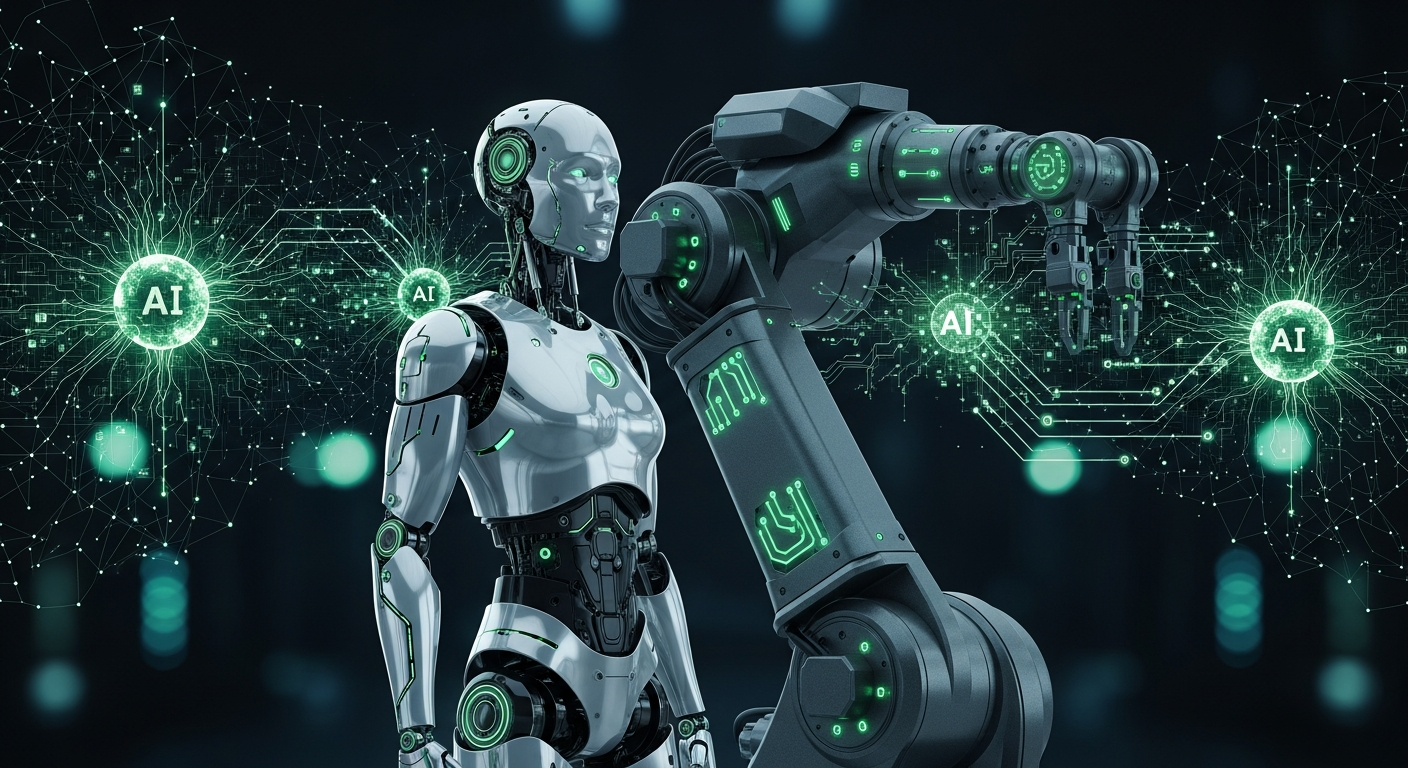
Robots have quietly moved out of science fiction and onto factory floors, into warehouses, hospitals, farms, and — increasingly — onto two legs that look unsettlingly like our own. In 2026, robotics sits at a genuine inflection point: industrial robot installations have hit an all-time high, and a new wave of AI-powered humanoid machines is entering pilot programs at major companies. The field is no longer just about repetitive arms in cages; it is about machines that sense, reason, and act in the messy real world.
This guide explains what robotics is, how robots actually work, the major types in use today, the role AI is playing, and where the technology is heading. Whether you are an engineer, a business leader, or simply curious, here is the clear picture.
What Is Robotics?
Robotics is the interdisciplinary field of designing, building, and operating machines that can sense their environment, process information, and physically act on the world. It blends mechanical engineering, electronics, computer science, and increasingly artificial intelligence into a single discipline often called mechatronics.
What separates a robot from an ordinary machine is autonomy and adaptability. A washing machine follows a fixed cycle; a robot perceives its surroundings, makes decisions, and adjusts its actions. That ability to close the loop between sensing and acting is the essence of robotics.
How Robots Work
Almost every robot, from a warehouse picker to a humanoid, runs on the same fundamental loop: sense, think, act.
First, the robot senses its environment through hardware like cameras, LiDAR, radar, force sensors, and tactile pads. Then it thinks — its software processes that sensory data, builds a model of the world, and decides what to do, increasingly using AI. Finally, it acts through actuators and motors that move joints, wheels, or grippers (called end effectors) to carry out the task.
Several core components make this possible: sensors for perception, a controller or onboard computer for processing, actuators for movement, a power source, and the software that ties it together. Navigation in mobile robots relies on techniques like SLAM (simultaneous localization and mapping), which lets a robot build a map and track its own position within it at the same time.
Types of Robots
Robotics is not one thing. The major categories in use today:
- Industrial robots are the workhorses — robotic arms welding, painting, and assembling in factories, typically fixed in place and built for speed and precision.
- Collaborative robots (cobots) are designed to work safely alongside humans without cages, sharing tasks rather than replacing whole workflows.
- Autonomous mobile robots (AMRs) navigate warehouses and facilities on their own, moving goods without fixed tracks.
- Humanoid robots have a human-like form, built to operate in environments designed for people.
- Service and domestic robots handle hospitality, cleaning, delivery, and personal assistance.
- Medical and surgical robots assist in operations and hospital logistics with extreme precision.
- Drones and specialized robots cover aerial work, agriculture, inspection, search and rescue, and more.
The Role of AI in Modern Robotics
The defining shift in 2026 is the fusion of robotics with artificial intelligence — sometimes called physical or embodied AI. Robots that use AI to work independently are becoming far more common, and the main benefit is autonomy: machines that adapt to changing conditions rather than following rigid scripts.
Different kinds of AI drive this. Analytical AI processes large datasets to detect patterns and guide decisions, while generative and learning-based approaches help robots understand instructions, learn new tasks, and handle situations they were not explicitly programmed for. The emergence of "robot foundation models" — large AI models trained to control physical machines — is pushing toward more general-purpose robots that can do many tasks rather than one.
The State of Robotics in 2026
The numbers reflect a maturing industry. The global market value of industrial robot installations has reached an all-time high of around $16.7 billion, according to the International Federation of Robotics, driven by automation demand and falling component costs. North America was the largest region for the broader robotics market in 2025, while Asia-Pacific is the fastest-growing.
The most explosive growth is in humanoids. Estimates vary, but the global humanoid robot market is widely valued in the range of $5–6 billion in 2026 and projected to reach roughly $39 billion by 2030, with some longer-range forecasts far higher — growth rates near 50% a year are common across analyst reports. The consistent theme is that robotics is shifting from a mature, steady industrial base toward a fast-emerging frontier in general-purpose and service machines.
The Rise of Humanoid Robots
Humanoid robots are the field's biggest story. Because so much of the world is built for the human body — stairs, doorknobs, tools, vehicles — a human-shaped robot can, in theory, slot into existing environments without redesigning them. Several platforms are already in commercial pilot programs in 2026, including Figure's robots, Unitree's G1, Agility Robotics' Digit, and Tesla's Optimus.
The economics are still settling. Prices in 2026 range from around $16,000 for an entry-level model to well over $150,000 for high-end research platforms, with the commercial market converging toward a $40,000–60,000 range and robot-as-a-service models emerging at a few thousand dollars per month. Broader commercial availability is expected toward 2027–2028, with mass-market scale projected near the end of the decade. For now, humanoids supplement human workers rather than replace them, handling dull, dirty, or dangerous tasks.
Robotics Across Industries
Robots are spreading well beyond the factory. In manufacturing, they remain central to assembly and quality control. In logistics and warehousing, mobile robots and collaborative humanoids are redefining efficiency. Healthcare uses surgical robots and facility logistics machines. Agriculture deploys robots for planting, harvesting, and monitoring. And service settings — retail, hospitality, and the home — are emerging frontiers, though dynamic human interaction makes them technically harder than controlled industrial environments.
Challenges and Limitations
Robotics still faces real barriers. Cost keeps advanced robots out of reach for many businesses. Reliability and safety are critical, especially around humans, requiring rigorous standards and collaborative designs. Perception in unstructured environments remains hard — robots that excel in a warehouse can struggle in a cluttered home. And the impact on jobs raises genuine social questions, even as the near-term reality is augmentation rather than wholesale replacement. Overcoming the cost, safety, and reliability barriers is exactly what stands between today's pilots and tomorrow's mass adoption.
The Future of Robotics
The trajectory points toward more capable, more general, and more autonomous machines. AI-driven autonomy, advances in human-like motion control, multimodal human-robot interaction, falling sensor and actuator costs, and a focus on safe collaborative design are the trends set to define the next phase. As foundation models for the physical world mature, the long-held dream of a general-purpose robot — one machine that can flexibly take on many tasks — is moving from research labs toward reality.
Conclusion
Robotics in 2026 is at a turning point: a mature industrial core hitting record installations, paired with an explosive new wave of AI-powered humanoid and service robots. Understanding the basics — the sense-think-act loop, the main robot types, and the central role of AI — is now essential for anyone watching where technology and the economy are headed.
The opportunities are vast, but so are the engineering and social challenges around cost, safety, and the future of work. Robots are increasingly capable teammates rather than replacements, and the organizations that learn to deploy them well will define the next industrial era.
Want more? Explore AxionSquare for ongoing coverage of robotics, AI, and the technologies building the future.
Frequently Asked Questions
What is robotics in simple terms?
Robotics is the field of building machines that can sense their environment, process information, and physically act — combining mechanical engineering, electronics, computer science, and AI to create machines that operate with some autonomy.
How do robots work?
Most robots follow a sense-think-act loop: they sense surroundings through cameras and sensors, process that data to decide what to do (increasingly with AI), and act through motors and actuators that move joints, wheels, or grippers.
What are the main types of robots?
The major types are industrial robots, collaborative robots (cobots), autonomous mobile robots, humanoid robots, service and domestic robots, medical and surgical robots, and drones and specialized machines.
Are humanoid robots available in 2026?
Several humanoid robots are in commercial pilot programs in 2026, such as Figure's robots, Unitree's G1, and Agility Robotics' Digit. Broader commercial availability is expected around 2027–2028, with prices ranging widely and robot-as-a-service models emerging.
Will robots replace human jobs?
In 2026, robots mostly supplement rather than replace workers, taking on repetitive or dangerous tasks. Automation will reshape some roles over time, but the near-term reality is augmentation and new kinds of work alongside robots.