The Robotics Industry in 2026: Humanoids, Surgical Robots, Industrial Automation, and the Rise of Intelligent Machines
An extensive exploration of the robotics landscape in 2026, covering humanoid robots, medical robotics, warehouse automation, agricultural robots, and how intelligent machines are transforming every sector of the economy.
Robotics · Global · 2026-03-02 · 8 min read · By John Awab
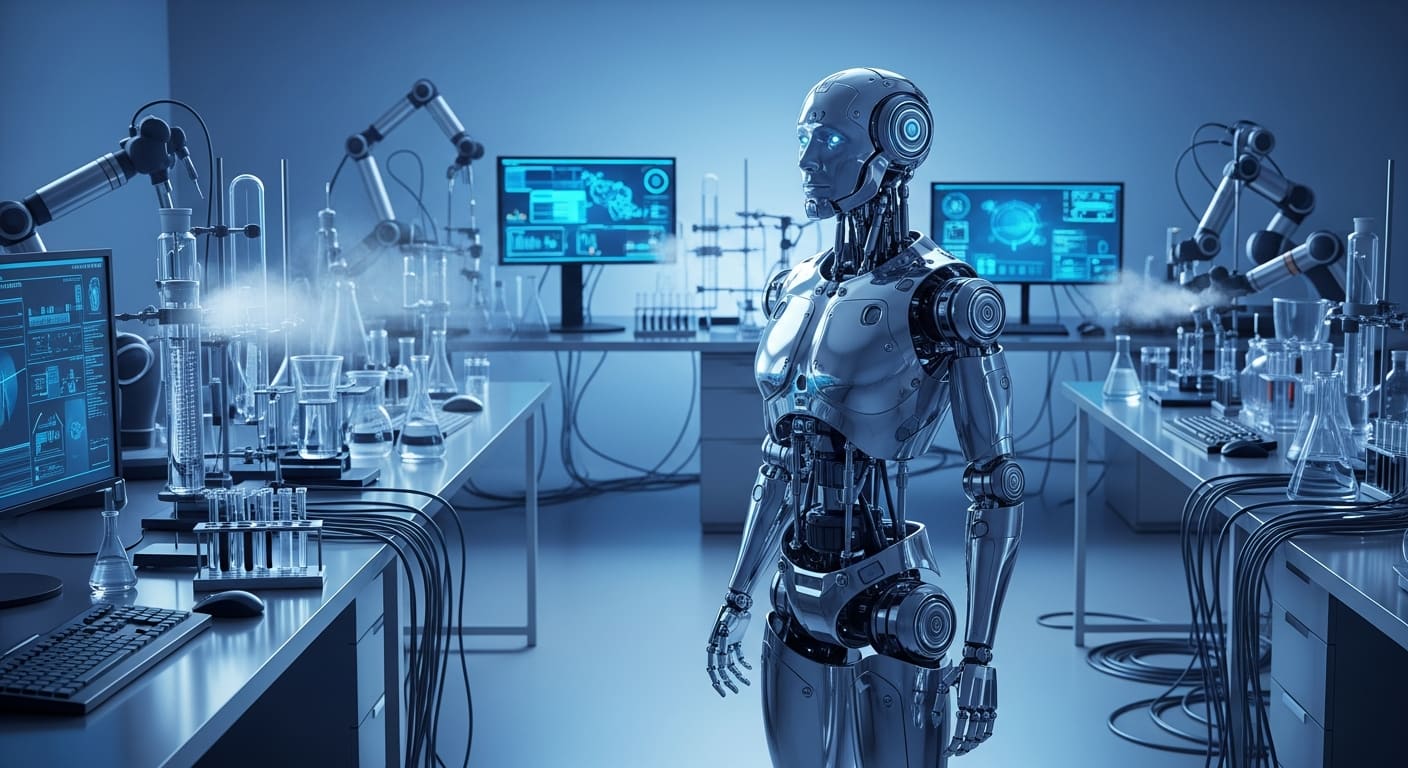
The robotics industry is experiencing unprecedented growth and innovation. In 2026, the global robotics market is valued at over $280 billion, with projections suggesting it will exceed $500 billion by 2030. From factories and warehouses to hospitals, farms, and homes, robots are becoming an integral part of the economic and social fabric of modern life.
The Humanoid Robot Race
The development of humanoid robots has accelerated dramatically, with multiple companies now deploying human-shaped robots in commercial settings. Tesla's Optimus Gen 3, Boston Dynamics' Atlas 2.0, Figure AI's Figure 02, and Agility Robotics' Digit are leading a new generation of bipedal robots designed to work alongside humans in various environments.
Tesla's Optimus is being deployed in Tesla's own manufacturing facilities, where it performs repetitive assembly tasks that are ergonomically challenging for human workers. The company plans to make Optimus commercially available by 2027, with an ambitious price target of under $30,000 — potentially making humanoid robots as affordable as cars.
Boston Dynamics' Atlas 2.0 has found its niche in logistics and warehousing. Amazon and DHL have signed agreements for pilot deployments in their distribution centers, where the robot's combination of mobility and dexterity makes it well-suited for tasks like package sorting, shelf stocking, and facility maintenance.
The race to commercialize humanoid robots reflects a broader belief in the industry that general-purpose robots — machines capable of performing a wide variety of tasks in unstructured environments — represent the next major computing platform, potentially as transformative as smartphones.
Medical Robotics: Precision and Accessibility
Medical robotics has evolved far beyond the pioneering da Vinci surgical system. In 2026, robotic surgery platforms are available in over 10,000 hospitals worldwide, performing procedures ranging from cardiac surgery and orthopedic reconstruction to neurosurgery and ophthalmology.
The latest generation of surgical robots offers capabilities that were unimaginable a decade ago. Sub-millimeter precision, haptic feedback that allows surgeons to feel tissue through robotic instruments, and AI-assisted surgical planning that optimizes incision placement and instrument paths have collectively raised the standard of surgical care.
Miniaturized surgical robots are opening new frontiers. Capsule-sized robots that can be swallowed by patients navigate the gastrointestinal tract to perform biopsies and deliver targeted drug treatments, eliminating the need for invasive procedures. Micro-robots injected into the bloodstream are being tested for targeted cancer therapy, guided by external magnetic fields to deliver chemotherapy drugs directly to tumor sites.
Telepresence surgical robots enable expert surgeons to operate on patients in remote locations, addressing the critical shortage of surgical specialists in rural and underserved areas. A surgeon in Boston can now perform a complex procedure on a patient in rural India with the same precision as if they were in the same operating room.
Industrial Automation and Smart Factories
The manufacturing sector continues to be the largest market for robotics, but the nature of industrial automation is changing. Traditional rigid automation — where robots perform the same task repeatedly — is giving way to flexible automation, where robots can be quickly reprogrammed and redeployed for different tasks.
Collaborative robots, or cobots, have become the fastest-growing segment of industrial robotics. Unlike traditional industrial robots that operate behind safety fences, cobots work alongside human workers, sharing workspace and tasks. Universal Robots, the market leader, has deployed over 1 million cobots worldwide, used in applications ranging from machine tending and quality inspection to assembly and packaging.
The concept of the smart factory — where interconnected robots, sensors, and AI systems optimize production in real-time — is becoming reality. BMW's newest facility in Hungary is considered the world's first fully autonomous factory, where robots handle everything from raw material processing to final assembly, with human workers primarily overseeing quality control and managing exceptions.
Agricultural Robotics: Feeding the Future
Agriculture is undergoing a robotics revolution that promises to address some of the most pressing challenges facing food production. Labor shortages, climate change, water scarcity, and the need to feed a growing global population are driving rapid adoption of agricultural robots.
Autonomous harvesting robots, developed by companies like Abundant Robotics, Agrobot, and Root AI, use computer vision to identify ripe produce and gently pick fruits and vegetables without damage. These robots operate 24 hours a day and can harvest crops with precision that reduces waste by up to 30% compared to traditional methods.
Precision agriculture robots monitor crop health at the individual plant level, applying water, fertilizer, and pesticides only where needed. This targeted approach reduces chemical usage by up to 90% and water consumption by up to 50%, while maintaining or improving crop yields. In water-stressed regions like the Middle East, sub-Saharan Africa, and parts of Asia, these technologies could be transformative for food security.
Autonomous tractor systems from John Deere and CNH Industrial are now widely adopted across large-scale farming operations in North America, Europe, and Australia. These systems use GPS, lidar, and AI to cultivate fields with centimeter-level precision, optimizing planting density and reducing soil compaction.
Service and Domestic Robots
The consumer robotics market has matured beyond simple vacuum cleaners. In 2026, robots for cooking, cleaning, security, and companionship are becoming increasingly common in homes, hotels, and retail environments.
Robot chefs capable of preparing multi-course meals are being deployed in restaurant chains and institutional kitchens. Hotels are using robotic concierges and room service delivery robots to enhance guest experiences and address staffing challenges. Retail stores employ inventory-scanning robots that autonomously navigate store aisles, checking stock levels and identifying misplaced items.
In the home, AI-powered domestic robots that can navigate complex environments, recognize household objects, and perform tasks like folding laundry, loading dishwashers, and organizing spaces are beginning to emerge from leading robotics companies. While still in early stages, these products represent the long-held vision of a robot assistant for every home.
Challenges and the Path Forward
Despite remarkable progress, the robotics industry faces significant challenges. The cost of advanced robots remains prohibitively high for many applications. Battery technology limits the operational time of mobile robots. And the AI systems that power robot decision-making, while impressive, still struggle with edge cases and novel situations.
Ethical considerations around job displacement also require careful attention. While robots create new categories of employment in manufacturing, maintenance, and programming, the transition can be disruptive for workers in affected industries. Thoughtful policy responses, including retraining programs and social safety nets, are essential to ensuring that the benefits of robotics are widely shared.